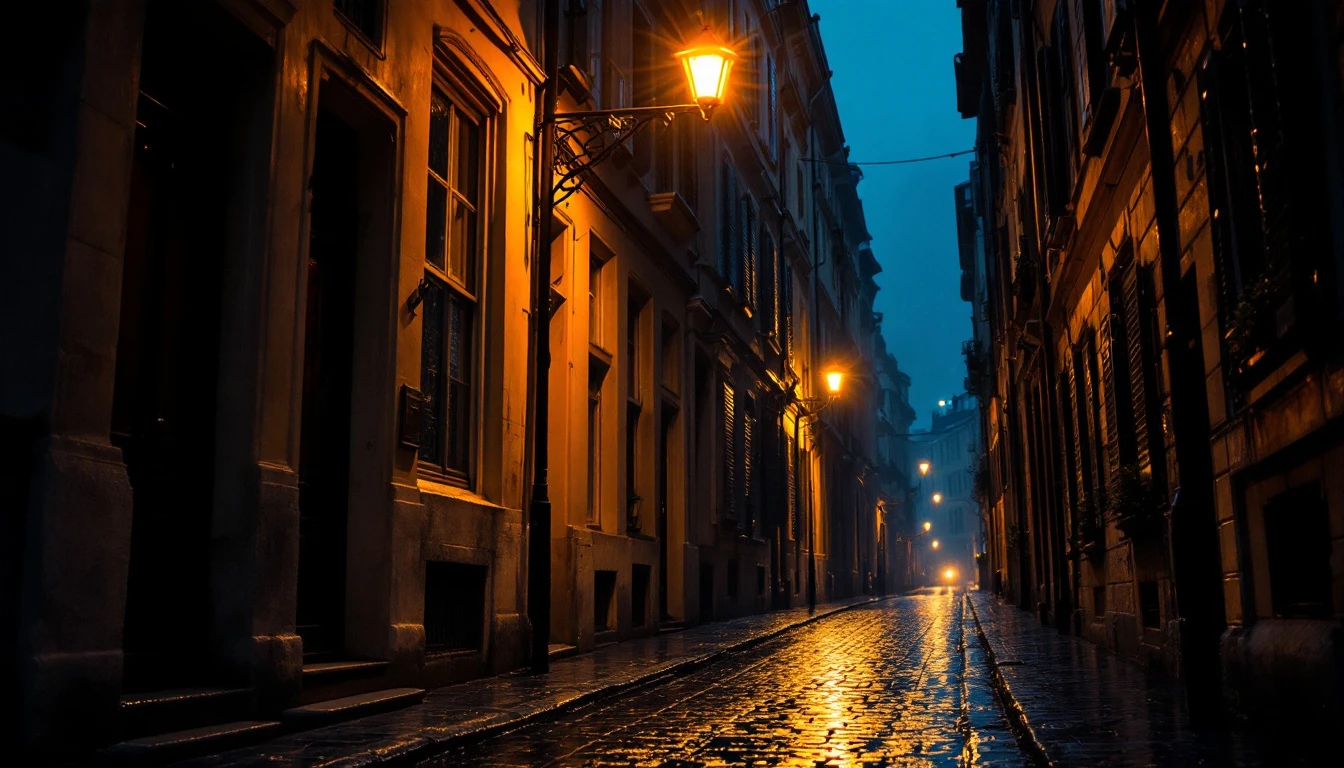
You know that feeling in certain films where the city, the building, the street feels alive? Where the location isn't backdrop but presence? These seven European films do exactly that, and every single one is on ReelBridge with confirmed English subtitles.
When a Place Watches You Back
The best atmospheric films make you feel like the location has an opinion. The crumbling tenement in one film judges its characters. The clean bureaucratic corridors in another suffocate them. This is what separates a good location from architecture that acts.
The films below span six decades and five countries. What they share is a camera that treats walls, staircases, and skylines the way other directors treat faces.
The One Where Paris Becomes a Funhouse
Tati's Paris in this film isn't recognizable Paris at all. It's corporate utopia gone absurd: reflective lobbies, fluorescent offices, doors that look like walls. The architecture is the joke, and it lands every single time.
The running time is long and the pacing is loose by design. Settle in and let the geometry of the city wash over you. You'll start noticing things in the background that are funnier than the foreground.
The One Where Occupied Paris Has a Pulse
The Boulevard du Temple was recreated in elaborate detail under extremely difficult conditions. You feel the texture of it: the crowd noise, the light off the theater marquees, the sense that everyone is always being watched. It's one of the most physically convincing environments in cinema history.
Even at nearly three hours, the setting keeps pulling you back in. The street breathes.
The One Where Berlin Is the Ghost
The choice to shoot in black and white for most of the film makes the city look like a ruin still dreaming. The empty lots between rebuilt blocks, the library interiors, the Wall itself as a canvas rather than a barrier. All of it carries specific postwar weight that a different city simply couldn't.
When color enters, it's tied to human warmth and presence. The contrast is architectural as much as emotional.
The One Where the German Tenement Suffocates You
This is framing as argument. The wide, empty hallways and the doorways with observers crowding the edges are not accidental. Fassbinder was deliberate about architecture as social force: who gets to stand where, who is visible, who is cornered.
Watch how often a character is isolated inside a geometric space while others fill the perimeter. It's discomfort built from nothing but room dimensions and camera placement.
The One Where East Berlin Feels Inescapable
The architecture here is ideological. The drab uniformity of the buildings is exactly the point: sameness as control. The Stasi officer's attic monitoring post is a masterclass in how a small, contained space can feel both claustrophobic and strangely intimate.
You'll understand why people couldn't simply leave. The city looks like it was designed to say no.
The One Where Bombed-Out Rome Breaks Your Heart
This is probably the most historically loaded setting on the list. The rubble was not a set. The tight apartment corridors were real. You're watching a city that still had blood on the cobblestones, and the film's rawness comes directly from that fact.
The neorealist approach meant filming what existed, which is why the city in this film feels more alive and more devastated than most war movies manage with enormous budgets.
The One Where Stockholm Turns Inward
Bergman came back to 1957 twice and both films use Scandinavian space in opposite ways. Wild Strawberries moves from cold institutional settings toward warmth as the character moves toward self-understanding. The Seventh Seal uses the exposed, wind-scraped coast to make mortality feel geographic.
Put them together for a double feature and the contrast between the two visions of Swedish space is its own kind of argument about how architecture shapes the people inside it.
One More: The Parisian Apartment as Slow Trap
This is the darkest film on the list and the one where architecture turns most claustrophobic. The apartment starts as a haven and ends as a cell, and nothing physically changes. Only the weight of what happens there shifts the feeling of the space entirely.
The high ceilings and tall windows that signal bourgeois comfort early in the film feel oppressive by the end. That reversal is entirely psychological, delivered by the same four walls throughout.
If any of these sound like your kind of film, the ReelBridge discovery tool can find more based on the exact tone and setting that got you. Start with what you love and see where it takes you.