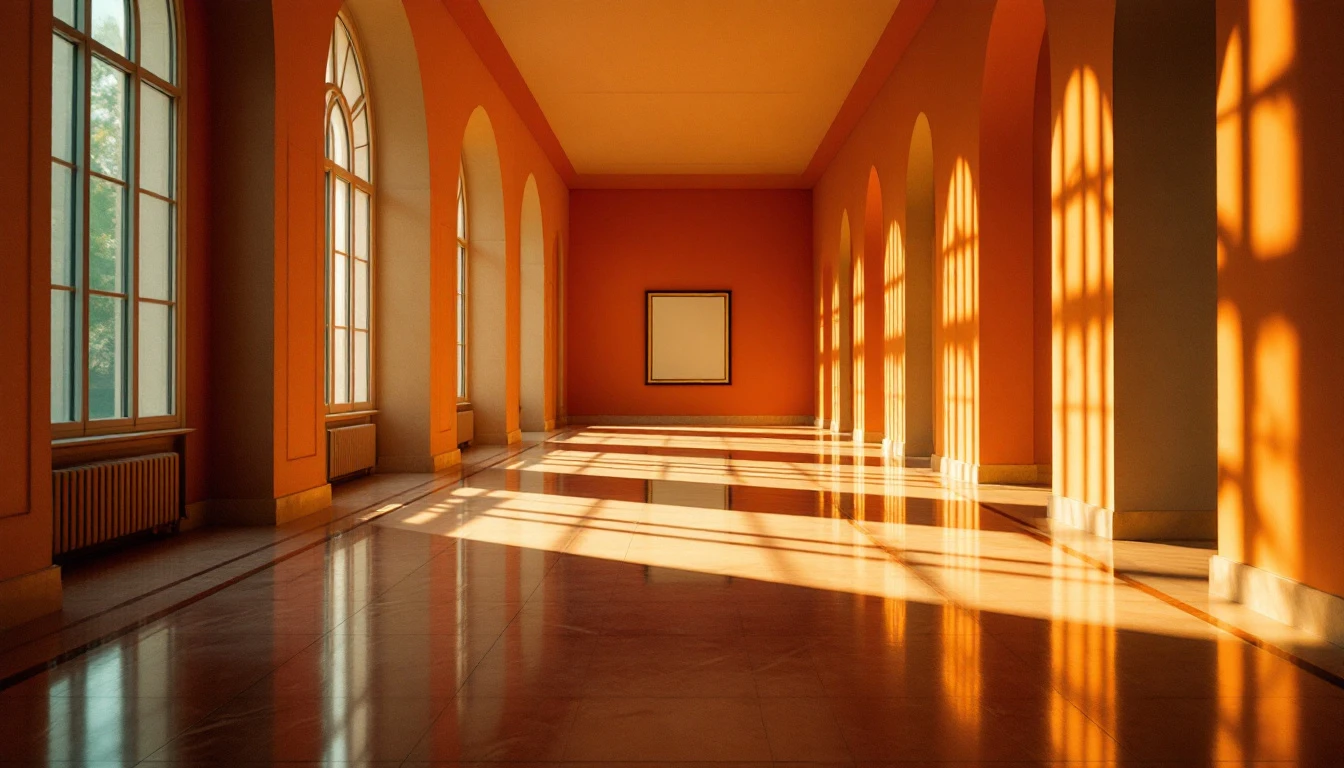
You don't need to study film to notice when a shot stops you cold. These seven foreign directors do it constantly, and every film on this list proves it. Here's where to start watching.
Why Some Directors Think in Paintings
Most movies move you through story. A handful move you through images first, story second. The directors below built careers on that second approach, where the camera placement, light, and negative space carry as much weight as the dialogue.
Every film here is in the ReelBridge catalog with confirmed English subtitles. Runtime notes are below so you can plan your night.
Akira Kurosawa: The Director Who Learned From Woodblock Prints
Kurosawa studied painting before he touched a camera, and it shows in every frame. His compositions pull from Japanese visual art traditions: strong diagonals, layered depth, figures placed where a Western director would leave dead space.
High and Low (1963, Japan, 8.4)
A wealthy executive's home becomes a stage set of control and moral pressure, with Kurosawa using the split-level house to make the class divide visible in every single shot.
Yojimbo (1961, Japan, 8.1)
A masterclass in wide compositions and long-lens restraint, where a lone ronin walks into town and the empty streets around him tell you everything about power and danger before a word is spoken.
Harakiri (1962, Japan, 8.4)
Masaki Kobayashi, not Kurosawa, directed this one, but the visual DNA is close: formal, symmetrical framing that makes the eventual rupture of violence land like a physical shock.
Isao Takahata: Animation as Brushstroke
Most animated films maximize detail. Takahata moved in the opposite direction. His compositions use restraint, watercolor-style rendering, and deliberate negative space to force your eye to stop and sit with an image.
The Tale of the Princess Kaguya (2013, Japan, 8.1)
Drawn in a style that looks like traditional Japanese ink painting come to life, every scene feels like a scroll unrolling. The loose, sketch-like edges of each frame are a visual choice, not a shortcut.
Grave of the Fireflies (1988, Japan, 8.4)
The soft light and quiet compositions in the early scenes make the devastation that follows genuinely unbearable. Takahata frames childhood with the tenderness of a portrait painter, which is exactly why it hurts.
Sergio Leone: The Italian Who Invented a Visual Grammar
Leone built his own cinematic language from scratch, and almost every frame he shot could be lifted out and printed. Extreme close-ups on eyes and hands, vast empty landscapes behind tiny figures, and compositions held for so long that you start reading meaning into the negative space.
The Good, the Bad and the Ugly (1966, Italy, 8.5)
The three-way standoff at the end is the most cited example of Leone's visual grammar, but every sequence before it is equally constructed. He treats widescreen as a canvas that needs to be filled deliberately, not filled up.
Once Upon a Time in the West (1968, Italy, 8.3)
The opening fifteen minutes contain almost no dialogue and build entirely through composition and sound. Leone frames the desert like a Dutch Golden Age painter frames an interior: nothing random, nothing wasted.
Park Chan-wook: Color as Visual Argument
The South Korean director Park Chan-wook uses color the way some directors use music. His compositions are symmetrical and formally controlled, but the palette underneath them is doing emotional work the plot never spells out.
Oldboy (2003, South Korea, 8.2)
The corridor fight scene is famous for its choreography, but look at how Park frames the before and after. The compression of the hallway is compositional, not accidental, and check
Oldboy's full breakdown on ReelBridge for subtitle and streaming details.
The Handmaiden (2016, South Korea, 8.2)
Every room in this film is framed like a Flemish interior painting, with light sources visible and figures placed according to social hierarchy. The composition tells you who holds power before anyone speaks.
Bong Joon-ho: Architecture as Metaphor
Bong Joon-ho uses physical space to carry meaning. Staircases, basements, rooftops, and thresholds are not just locations. They are compositional arguments about where people stand relative to each other.
Parasite (2019, South Korea, 8.5)
The vertical axis of the film (wealthy family up high, poor family below ground) is built into every frame. The staircase compositions alone could be a photography exhibition. See
Parasite with confirmed English subs if you somehow haven't watched it yet.
Memories of Murder (2003, South Korea, 8.1)
Bong shoots rural Korea with wide, low compositions that make the countryside feel both ordinary and sinister. The open fields are as carefully framed as any interior, and the space around the detectives communicates their helplessness better than dialogue could.
Giuseppe Tornatore: Light That Remembers
The Italian director Giuseppe Tornatore shoots nostalgia as a physical texture. His compositions are warm and wide, with light that feels like it is coming from a memory rather than a lamp. Scenes linger a beat past where a practical director would cut.
Cinema Paradiso (1988, Italy, 8.4)
The projection booth scenes alone justify this placement. Tornatore frames the beam of light from a cinema projector like a sacred object, and the compositions around young Toto place him at the center of his world the way Renaissance painters placed their subjects.
The Legend of 1900 (1998, Italy, 8.2)
A man who never leaves a ship becomes the subject of compositions that feel genuinely oceanic in their scale. The piano scenes are framed with a stillness that turns musical performance into visual portraiture.
Edward Yang: Wide Shots That Hold Everything
The Taiwanese director Edward Yang rarely cuts close. His frames hold multiple characters at distance, with action happening simultaneously in different parts of the image. It takes a minute to learn how to watch him, and then you can't look away.
A Brighter Summer Day (1991, Taiwan, 8.3)
Yang shoots 1960s Taipei in deep, shadowed compositions where teenagers stand in doorways and alleyways that look like chessboard positions. The four-hour runtime sounds daunting, but each scene earns its space.
Practical notes before you queue:
- All films above have confirmed English subtitles available through ReelBridge's catalog links.
- Runtimes vary widely. Grave of the Fireflies runs about 89 minutes. A Brighter Summer Day is 237 minutes. Plan accordingly.
- New to subtitles? Start with Parasite or The Intouchables (France, 8.3). Both are fast-paced enough that you forget you're reading.
- Leone's two westerns and Park Chan-wook's two films pair well as double features if you want to go deep on a single director's visual style.
If any of these frames hooked you, browse the full catalog on ReelBridge and filter by country or director to find what to watch next.