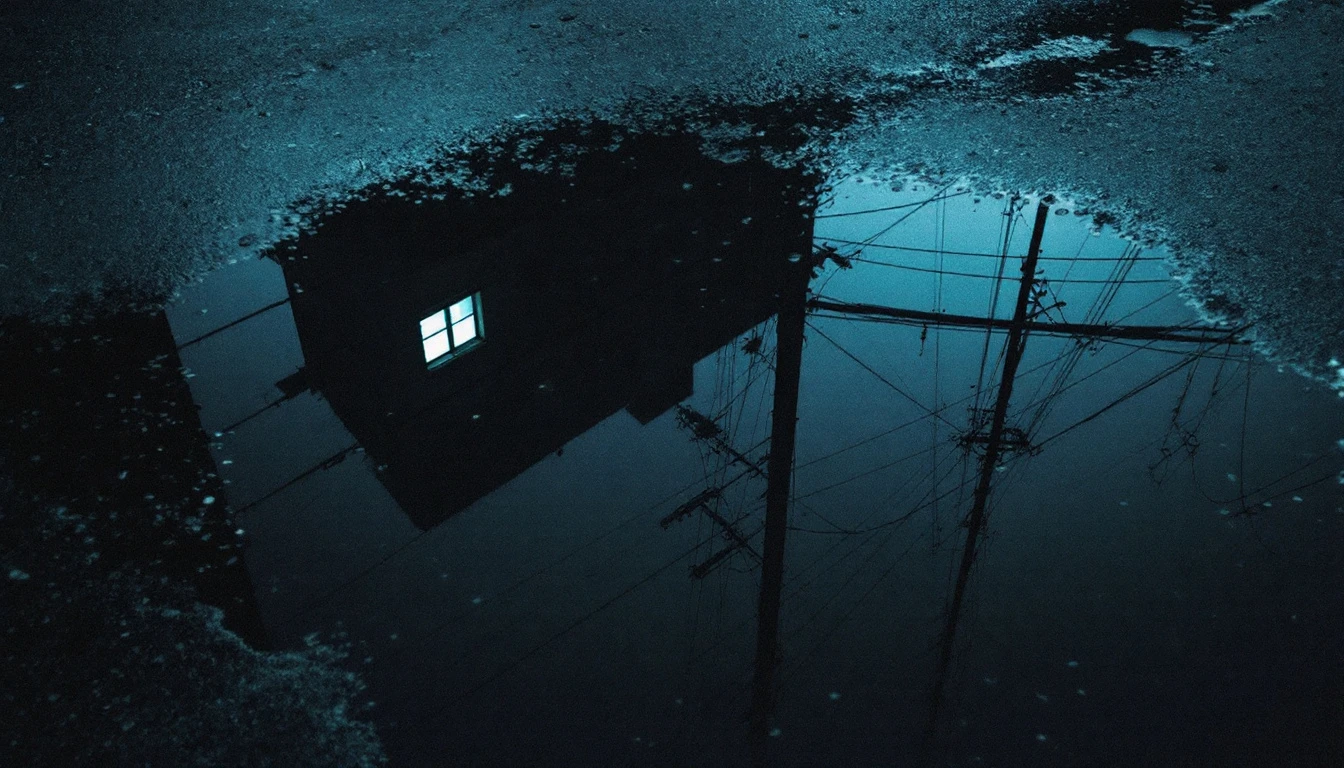
If The Ring remake freaked you out back in 2002, you were actually watching a watered-down version of something far more unsettling. Here are the Japanese originals (and their closest cousins) that defined an era of horror unlike anything Hollywood was making.
What Made J-Horror Different
American horror in the 90s leaned on slashers, jump scares, and self-aware humor. Japanese horror went somewhere else entirely. The threat was slow, atmospheric, and deeply wrong in a way that was hard to name.
Long dark hair. Grudges that never expire. A creeping dread that follows you home from the theater. That specific feeling had a name, and it came out of Japan in a concentrated burst between roughly 1998 and 2004.
The Two Films That Started Everything
If you want to understand J-Horror, two films are non-negotiable starting points. Both arrived within a few years of each other and both rewired what audiences expected from a scary movie.
Hideo Nakata's original is quieter than the American remake and twice as effective. The dread builds slowly, the imagery sticks around for days, and the ending still lands like a cold hand on the back of your neck.
Takashi Shimizu built a horror film around the idea that some evil simply does not stop and does not care about your intentions. The non-linear structure makes the dread feel inescapable rather than episodic.
The Wildcard: Takashi Miike's Contribution
Takashi Miike was making films at a pace that seemed physically impossible during this era, and not all of them were horror. But one was, and it became the film that even horror fans hesitate to recommend to newcomers.
It starts as a quiet drama about a widower looking for a new partner. It stays that way for a long time. Then it does not. Miike's pacing is the whole trick, and it works completely.
Audition is the film that convinced Western critics and festival programmers that something genuinely new was happening in Japanese horror. It does not rely on ghosts or curses. The terror is entirely human, which makes it worse.
Going Back Further: The Film That Predicted the Wave
The J-Horror boom of the late 90s did not come from nowhere. Japanese filmmakers had been building toward this kind of atmospheric dread for decades, and one film from 1964 proves that the ingredients were always there.
Kaneto Shindo shot this in a dense field of tall grass and made it one of the most visually suffocating horror films ever made. The threat is ambiguous, the morality is dark, and the imagery feels genuinely ancient. It stands completely on its own.
If you work through Ring and Ju-on and want to understand the deeper roots of Japanese horror aesthetics, Onibaba is the film that connects the dots. The rating of 7.7 is not a surprise once you watch it.
What to Watch After You've Seen the Big Names
Once Ring and Audition are done, a lot of people hit a wall. They want more of that specific feeling but do not know where to look. The answer is often South Korea, which absorbed the J-Horror template and built something distinct on top of it.
A village starts falling apart after a stranger arrives, and a local cop watches his family get pulled into something he cannot explain. Na Hong-jin builds paranoia so methodically that by the final act you genuinely do not know what to believe. Tagged as a discussion starter for a reason.
A woman is haunted by a ghost that appears whenever she feels happy, and a street magician falls for her despite the obvious problem. The tone is quietly haunting in a way that feels directly descended from the J-Horror tradition, but the emotional core is warmer than most of these films.
A pastor investigating a fringe religious cult discovers layers of mystery that get increasingly disturbing. Dense, unsettling, and built for people who want to talk about what they just watched.
The Found Footage Entry Point
Found footage has been done to death in the West, but a few films in this region used the format in ways that feel genuinely fresh. If you want something that functions more like a haunted house ride than a slow burn, this one delivers.
A group streams a live ghost hunt at one of Korea's most notorious real locations, and things go wrong fast. It is straightforwardly fun-scary in the best way, and the final twenty minutes are legitimately effective.
The Three-Director Anthology Worth Seeking Out
One of the era's more interesting experiments collected three short horror films from three directors into a single feature. Each segment takes a different angle on obsession, loss, and the ways people hurt each other.
Fruit Chan, Park Chan-wook, and Takashi Miike each contribute a segment, and the tonal range is impressive. Brutal in places, formally inventive throughout, and the DNA tag for love obsession and gut punch is accurate. Not a casual watch, but a rewarding one.
Ready to find which of these fits your exact horror preference? Browse the full breakdowns, confirmed subtitle status, and streaming availability on ReelBridge, where each film page tells you exactly what you are walking into before you commit.