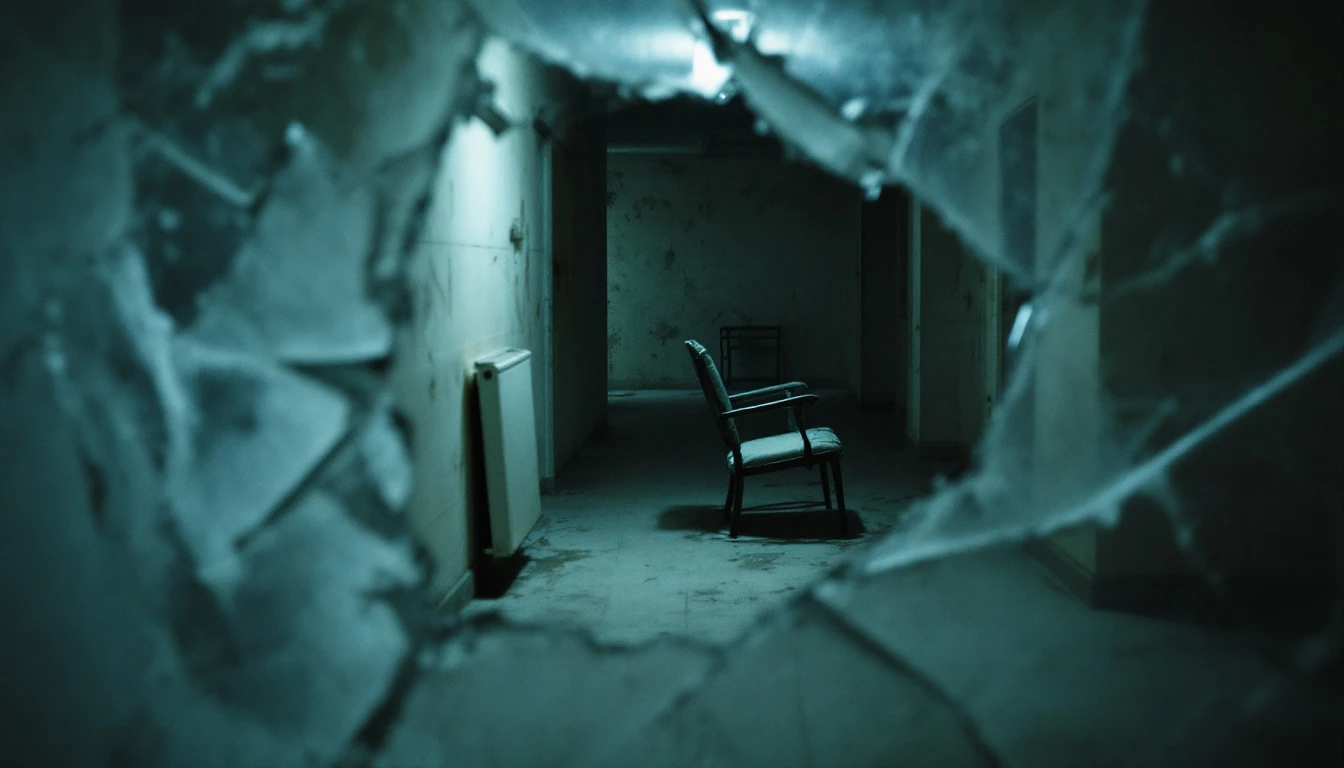
You love the shaky-cam dread of found footage, but you've mostly been watching the same American titles. The best found footage films in the world came from places like Spain, South Korea, and Japan, and they hit harder than most of what's in your queue right now.
Wait, Does the Catalog Have Found Footage?
Honest answer: found footage as a strict technical genre is a narrow slice of world cinema, and our current catalog skews toward prestige drama, crime, and thriller. But the DNA that makes found footage addictive, paranoia, helplessness, brutal pacing, gut-punch reveals, lives in a lot of foreign films that don't get the same hype.
If you love found footage, what you actually love is probably one or more of these things:
- A feeling of being trapped with no way out
- Paranoia that slowly becomes justified
- Brutal, unflinching consequences
- Investigations that unravel into something worse than you expected
- The gut punch of a reveal that recontextualizes everything
Every film below delivers at least two of those. Some deliver all five.
The Paranoia Picks
Found footage works because it makes you feel like you're watching something real that wasn't meant to be seen. These two films achieve the same effect through completely different means, but the crawling sense that something is deeply wrong arrives just as fast.
Oldboy (2003, South Korea, 8.2), A man is imprisoned in a room for fifteen years with no explanation, then released with even less of one. The paranoia is so thick it becomes physical, and the gut punch at the end is genuinely one of cinema's most disturbing reveals.
The Invisible Guest (2017, Spain, 8.1), A man wakes up next to a murder victim with no memory of how he got there. The whole film is a tightening knot of unreliable testimony and escalating deception, structured like a trap closing around the viewer.
The Investigation That Goes Too Far
A lot of found footage films are really investigation stories where the investigators discover something they can't unknow. That "point of no return" feeling is exactly what these two nail.
Memories of Murder (2003, South Korea, 8.1), Based on South Korea's first serial murder case, this follows two detectives whose methods and certainty collapse under the weight of what they can't solve. The helplessness is earned and devastating.
High and Low (1963, Japan, 8.4), Akira Kurosawa's crime procedural about a kidnapping that goes sideways starts as a locked-room thriller and opens into something much stranger. It moves methodically and then hits you with an ending that sits with you for days.
Brutality Without a Filter
One of found footage's appeals is that the roughness of the format makes violence feel unmediated. These films achieve that rawness through filmmaking choices, not camera gimmicks.
City of God (2002, Brazil, 8.4), Shot with a kinetic, almost documentary energy in the favelas of Rio de Janeiro, this feels like footage that shouldn't exist. The violence is constant and casual in exactly the way found footage tries to fake.
Come and See (1985, USSR, 8.2), A Soviet war film that puts you so close to its teenage protagonist during the Nazi occupation of Belarus that watching it feels like a violation of something. Nothing in American found footage comes close to this level of immersive dread.
Silenced (2011, South Korea, 8.2), Based on a true case of abuse at a school for deaf children. It's brutal and unsettling in a way that feels procedurally real, the kind of institutional horror that found footage tries to manufacture and this film just documents.
The Gut-Punch Reveal Films
Found footage lives and dies on its final ten minutes. These foreign films share that structure: a slow build toward a revelation that reframes everything you watched before it.
The Handmaiden (2016, South Korea, 8.2), A con scheme set in Japanese-occupied Korea unfolds in three acts, each one recontextualizing the last. By the time you understand what you've been watching, you want to start it over immediately.
Harakiri (1962, Japan, 8.4), A samurai arrives at a feudal lord's court and requests a place to die with honor. What follows is a methodical dismantling of an institution, revealed through testimony that builds to something genuinely shattering. The structure is pure slow-burn thriller.
For the Horror-Adjacent Crowd
Found footage is mostly a horror genre. If atmosphere and dread are what you're after, these two are worth your time even if they don't involve cameras.
PERFECT BLUE (1998, Japan, 8.3), An animated psychological thriller about a pop star who can't tell her public image from her private self, and then can't tell reality from fiction at all. It's disorienting in exactly the way the best found footage is.
La Haine (1995, France, 8.1), Shot in high-contrast black and white with a raw, almost accidental energy, this follows three young men in the Paris suburbs over twenty-four hours after a riot. It feels like it was filmed on whatever was available, and the clock ticking toward something terrible never lets up.
Practical note: All of these films have confirmed English subtitles. Runtimes range from 45 minutes (Harakiri is 135 minutes, Come and See is 142 minutes) to a tight 100 minutes for La Haine. If you're subtitle-hesitant, start with City of God or The Handmaiden. Both are visually propulsive enough that the reading feels natural within the first ten minutes. ReelBridge has subtitle confirmation and streaming availability listed on every film page.
The Short Version
Found footage works because it makes horror feel real, uncontrolled, and inescapable. Every film on this list does one or more of those things better than most found footage actually does. Start with Memories of Murder's full breakdown or check The Handmaiden with English subs confirmed on ReelBridge, and go from there.